Introduction
If you’re looking for authentic Polish food in Szczecin without spending a fortune, Bar Mleczny Turysta should be at the top of your list. Unlike trendy restaurants or modern cafés, this traditional Polish milk bar offers something increasingly rare: simple, homemade meals prepared using recipes that have been enjoyed by generations of Poles.
For many visitors, eating at a milk bar is just as much a cultural experience as visiting museums or exploring historic landmarks. These canteen-style restaurants have been feeding locals for well over a century and remain one of the best places to experience genuine Polish cuisine at remarkably affordable prices.
During my visit to Szczecin, I wanted to see whether Bar Mleczny Turysta lived up to its reputation. Was it really as good as the locals claimed? Could traditional Polish comfort food still be served at prices that seem almost unbelievable by today’s standards? And most importantly, is it worth adding to your itinerary if you’re visiting the city?
In this guide, I’ll share everything you need to know before visiting Bar Mleczny Turysta in Szczecin, including the fascinating history of Polish milk bars, what makes them so unique, what you can expect from the menu, how much meals cost, and why this unassuming restaurant has become one of Szczecin’s most beloved dining spots.
Whether you’re travelling on a budget, searching for authentic Polish flavours, or simply curious about one of Poland’s most distinctive culinary traditions, this guide will help you decide if Bar Mleczny Turysta deserves a place on your travel itinerary.
What Is a Polish Milk Bar?
Before visiting Poland, many international travellers have never heard of a milk bar, or bar mleczny in Polish. Despite the name, don’t expect a café serving milkshakes or dairy-based desserts. A Polish milk bar is something entirely different.
Milk bars are casual, self-service restaurants serving freshly prepared, home-style Polish dishes at incredibly affordable prices. They specialise in comforting, traditional meals that many Poles grew up eating at home, making them a nostalgic favourite for locals and an authentic culinary experience for visitors.
The name “milk bar” dates back to a time when many of the dishes were based around dairy products, flour and vegetables. Over the decades, however, menus expanded to include hearty meat dishes, soups, dumplings, pancakes and a wide variety of classic Polish comfort food.
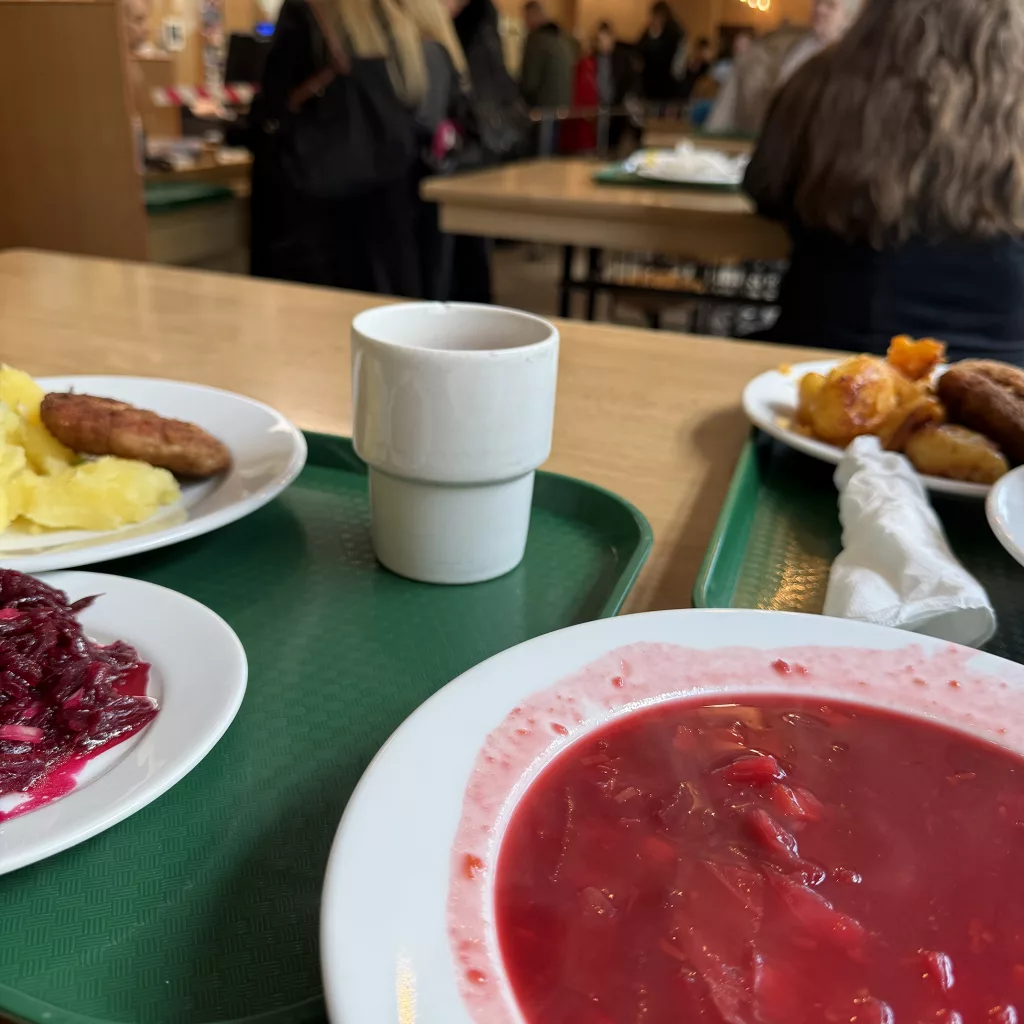
Today, stepping inside a milk bar feels a little like stepping back in time. Interiors are usually simple and functional rather than luxurious. You’ll often collect your food from a serving counter, carry it on a tray to your table, and enjoy a meal surrounded by office workers, students, pensioners, families and tourists alike.
Unlike many restaurants that have adapted their menus to suit international visitors, milk bars continue to cook the food that Polish people actually eat in everyday life. That’s one of the reasons they remain so popular, even decades after many expected them to disappear.
For travellers wanting to experience Poland beyond the tourist hotspots, visiting a milk bar is often one of the most authentic meals they can have.
The Fascinating History of Milk Bars in Poland
The story of Poland’s milk bars stretches back more than 125 years.
The very first milk bar opened in Warsaw in 1896, founded by entrepreneur Stanisław Dłużewski. His vision was simple: create an affordable place where people could enjoy nutritious meals based primarily on dairy products, grains, eggs and vegetables. At the time, meat was relatively expensive, so these lighter, inexpensive dishes proved incredibly popular.
Following the Second World War, Poland entered the communist era, and milk bars took on an entirely new role within society.
Under the communist government, many milk bars received state subsidies to ensure that affordable meals were available to everyone. They became an essential part of everyday life, serving factory workers, office employees, students, pensioners and families. Eating at a milk bar wasn’t considered unusual—it was simply part of daily life.
Because the government subsidised many ingredients, prices remained exceptionally low, allowing people from all walks of life to enjoy hot, freshly prepared meals even during difficult economic periods.
The menus reflected traditional Polish home cooking rather than restaurant dining. Dishes such as pierogi, cabbage rolls, tomato soup, beetroot soup, potato pancakes, pork schnitzels and meatballs became staples that generations of Poles still associate with childhood.
When communism ended in 1989, many people predicted the disappearance of milk bars. Thousands closed as private restaurants began opening across the country, offering more modern dining experiences.
Yet surprisingly, many survived.
Today, milk bars have experienced something of a revival. While locals continue visiting them for affordable lunches and nostalgic comfort food, international tourists have also begun seeking them out as a way to experience authentic Polish culture beyond the typical tourist attractions.
Rather than competing with fashionable restaurants, milk bars offer something entirely different: honest cooking, generous portions and recipes that have changed very little over the decades.
They remind visitors that good food doesn’t have to be expensive, and that sometimes the simplest meals leave the strongest memories.
Bar Mleczny Turysta – A Szczecin Institution
Among Szczecin’s many restaurants, Bar Mleczny Turysta holds a special place in the hearts of locals.
Operating for more than six decades, it has become one of the city’s best-known milk bars and continues to attract a loyal customer base every single day. Unlike many restaurants that come and go, Turysta has remained remarkably consistent, earning a reputation for generous portions, friendly service and reliable homemade cooking.
Its popularity isn’t driven by clever marketing or social media trends. Instead, it has grown through word of mouth. Ask many residents where to find authentic Polish food at a reasonable price, and chances are they’ll point you towards Bar Mleczny Turysta.
One of the first things you’ll notice is the queue. During lunchtime, it’s not unusual to see people patiently waiting outside before the doors even open. Office workers stop by during their lunch breaks, pensioners gather for familiar dishes they’ve been enjoying for years, students appreciate the affordable prices, and increasingly, tourists arrive hoping to experience a genuine slice of everyday Polish life.
What makes Turysta particularly special is that it hasn’t tried to reinvent itself to appeal to visitors. There are no gimmicks, themed interiors or elaborate presentations. Instead, the focus remains firmly on what matters most: serving freshly prepared, comforting food quickly and at prices that are accessible to almost everyone.
In a world where dining out often feels increasingly expensive, places like Bar Mleczny Turysta remind us that great food doesn’t have to come with a premium price tag.
For many people, that’s exactly why they keep coming back.
Visiting Bar Mleczny Turysta: Location, Atmosphere, Menu and Prices
Where Is Bar Mleczny Turysta?
One of the reasons Bar Mleczny Turysta is so popular is its convenient location in the heart of Szczecin. Whether you’re exploring the city’s historic centre, arriving by train or spending the day shopping, it’s easy to include a visit without going out of your way.
Address:
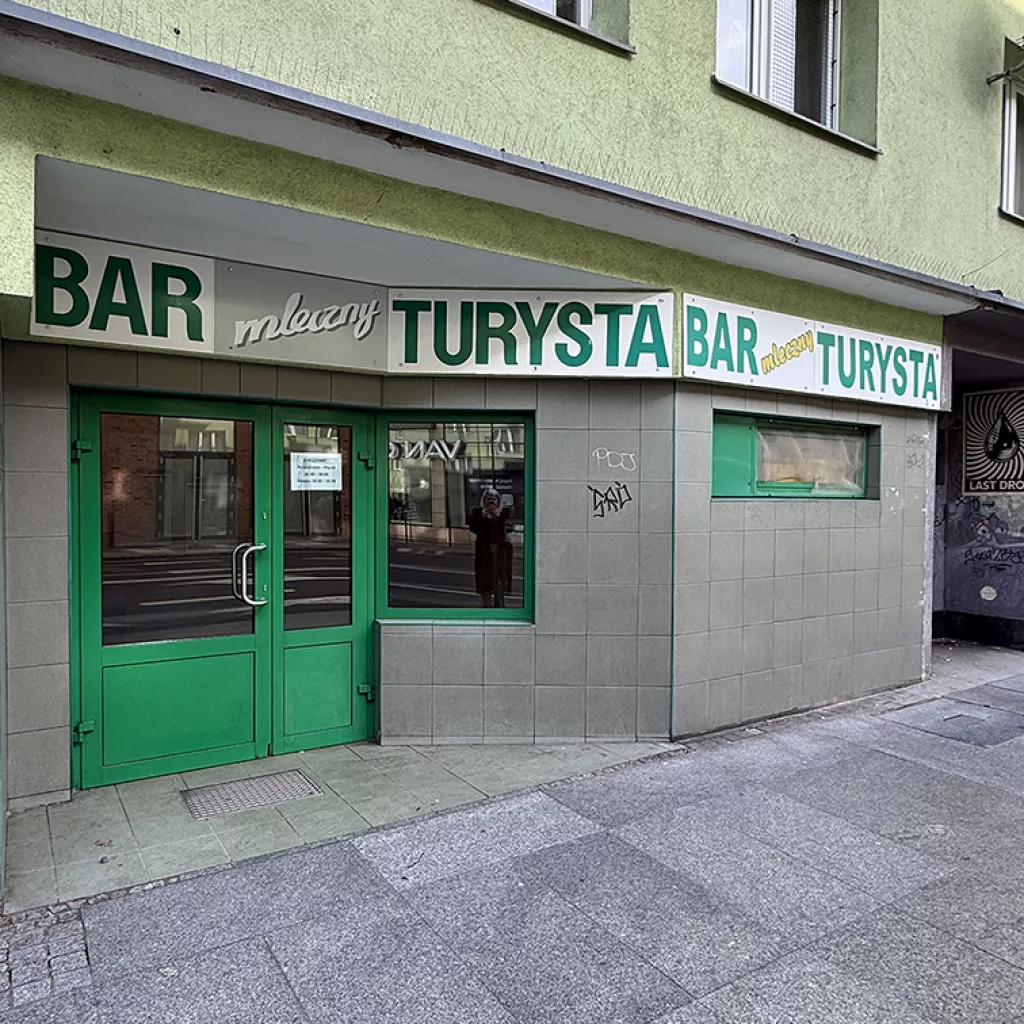
Bar Mleczny Turysta
ul. Edmunda Bałuki 17
70-407 Szczecin, Poland
The restaurant is only a short walk from many of Szczecin’s main attractions, making it an excellent choice for lunch while sightseeing.
Approximate walking times include:
| Attraction | Walking Time |
|---|---|
| Galaxy Shopping Centre | 5 minutes |
| Plac Grunwaldzki | 5 minutes |
| Brama Portowa | 12 minutes |
| Szczecin Główny Railway Station | 20–25 minutes |
| Wały Chrobrego | 20 minutes |
| Old Town (Stare Miasto) | 20 minutes |
If you’re travelling by public transport, several tram and bus routes stop nearby, making it easy to reach from almost anywhere in the city.
For visitors spending a weekend in Szczecin, Bar Mleczny Turysta is perfectly positioned between the shopping district and the historic centre, making it an ideal stop before continuing your sightseeing.
Opening Hours
One thing worth remembering is that milk bars don’t usually operate like traditional restaurants.
Rather than staying open late into the evening, they mainly serve breakfast and lunch, when demand from local workers and residents is highest.
At the time of writing, Bar Mleczny Turysta is generally open:
Monday – Friday: 8:00 am – 6:00 pm
Saturday: 9:00 am – 5:00 pm
Sunday: Closed
Opening hours can occasionally change during public holidays, so it’s always worth checking online before making a special trip.
Unlike tourist-focused restaurants, milk bars rarely stay open for dinner service, so I’d recommend planning your visit between 11:30 am and 2:00 pm, when you’ll have the widest choice of freshly prepared dishes.
Do bear in mind that this is also the busiest time of day. If you want to avoid the lunchtime rush, arriving shortly after opening is usually your best option.
First Impressions
Walking into Bar Mleczny Turysta feels very different from entering a modern café or restaurant.
There’s no elaborate décor, designer lighting or carefully curated interior designed for Instagram photos.
Instead, you’re greeted by something much more authentic.
The atmosphere is busy but welcoming. Customers queue patiently while studying the daily menu, trays move quickly along the serving counter and staff work efficiently to keep the line moving.
One of the first things I noticed was the mix of people dining there.
Rather than being filled exclusively with tourists, most tables were occupied by locals. Office workers enjoying their lunch break, elderly couples who had probably been coming here for years, students looking for an affordable meal and families with young children all shared the dining room.
For me, that’s always a good sign.
Whenever locals choose to eat somewhere despite having countless alternatives nearby, it usually says more about the quality than any online review ever could.
Although the restaurant can become busy during lunchtime, the queue moves surprisingly quickly. Staff are clearly experienced, and despite the high volume of customers, everything remains well organised.
Don’t expect luxury.
Expect authenticity.
What Is It Like Inside?
The interior perfectly reflects the purpose of a traditional Polish milk bar.
Tables and chairs are practical rather than decorative, the dining room is bright and functional, and the emphasis is firmly placed on serving good food rather than creating an upscale dining experience.
Some visitors may initially find the décor rather plain compared with trendy restaurants, but that’s entirely part of the experience.
Milk bars have never tried to compete through interior design.
Instead, they’ve focused on providing:
- freshly cooked meals
- generous portions
- affordable prices
- quick service
- consistent quality
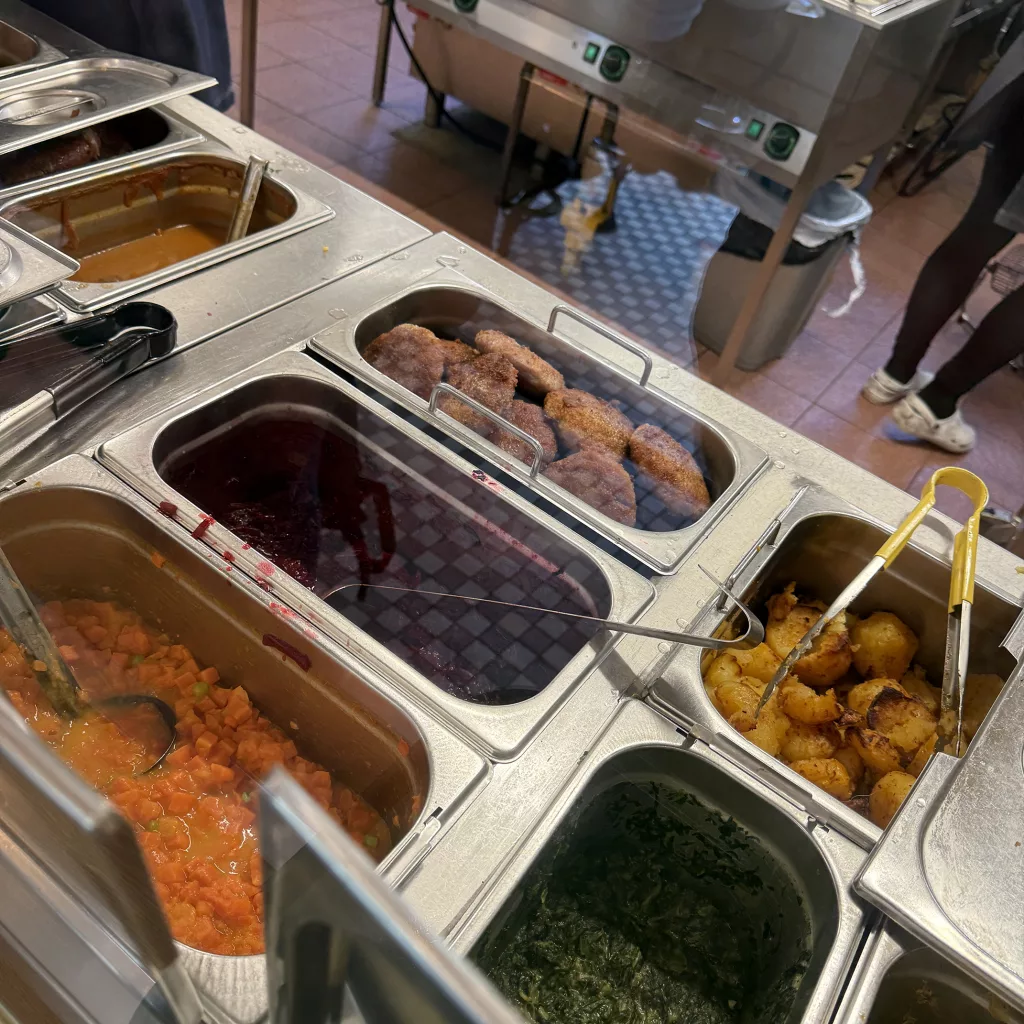
You’ll usually collect your food from the serving counter before finding your own table.
The atmosphere is informal, relaxed and refreshingly unpretentious.
Rather than encouraging customers to spend hours over coffee, the restaurant is designed to serve delicious meals efficiently, allowing tables to become available for the next wave of hungry diners.
The Menu
One of my favourite things about Bar Mleczny Turysta is that the menu feels genuinely Polish.
Instead of adapting dishes to suit tourists, it celebrates the comforting meals that many Polish families still prepare at home.
Although the selection changes daily depending on what’s being cooked, you’ll usually find a wonderful variety of traditional dishes.
Some of the most popular options include:
Soups
Polish soups are famous for being hearty enough to serve as a meal on their own.
Depending on the day, you may find:
- Tomato soup
- Żurek (traditional sour rye soup)
- Beetroot soup (barszcz)
- Cucumber soup
- Vegetable soup
- Chicken broth (rosół)
A bowl of soup is often the perfect starter—or even lunch by itself.
Pierogi
No visit to Poland feels complete without trying pierogi.
These soft dumplings come with a variety of fillings, including:
- potato and cheese
- meat
- mushrooms
- cabbage
- seasonal fruit
Served with fried onions, butter or sour cream, they’re one of Poland’s best-loved comfort foods.
Meat Dishes
If you’re looking for a more substantial meal, you’ll usually find classics such as:
- Schabowy (breaded pork cutlet)
- Chicken fillet
- Meatballs in sauce
- Pork stew
- Goulash
- Roast pork
These are typically served alongside potatoes, rice, buckwheat or mashed potatoes, accompanied by fresh salads or cooked vegetables.
Vegetarian Options
Despite their reputation for hearty meat dishes, milk bars have always catered well to vegetarians.
Common options include:
- potato pancakes
- cheese pierogi
- pancakes with cheese
- vegetable cutlets
- seasonal salads
- mushroom sauces
- cabbage dishes
This reflects the historical origins of milk bars, which originally focused on dairy and vegetarian meals.
Desserts
If you still have room afterwards, you might also find:
- pancakes with sweet cheese
- apple pancakes
- rice pudding
- cheesecake
- fruit compote
- jelly desserts
Simple, nostalgic and homemade.
What I Ordered
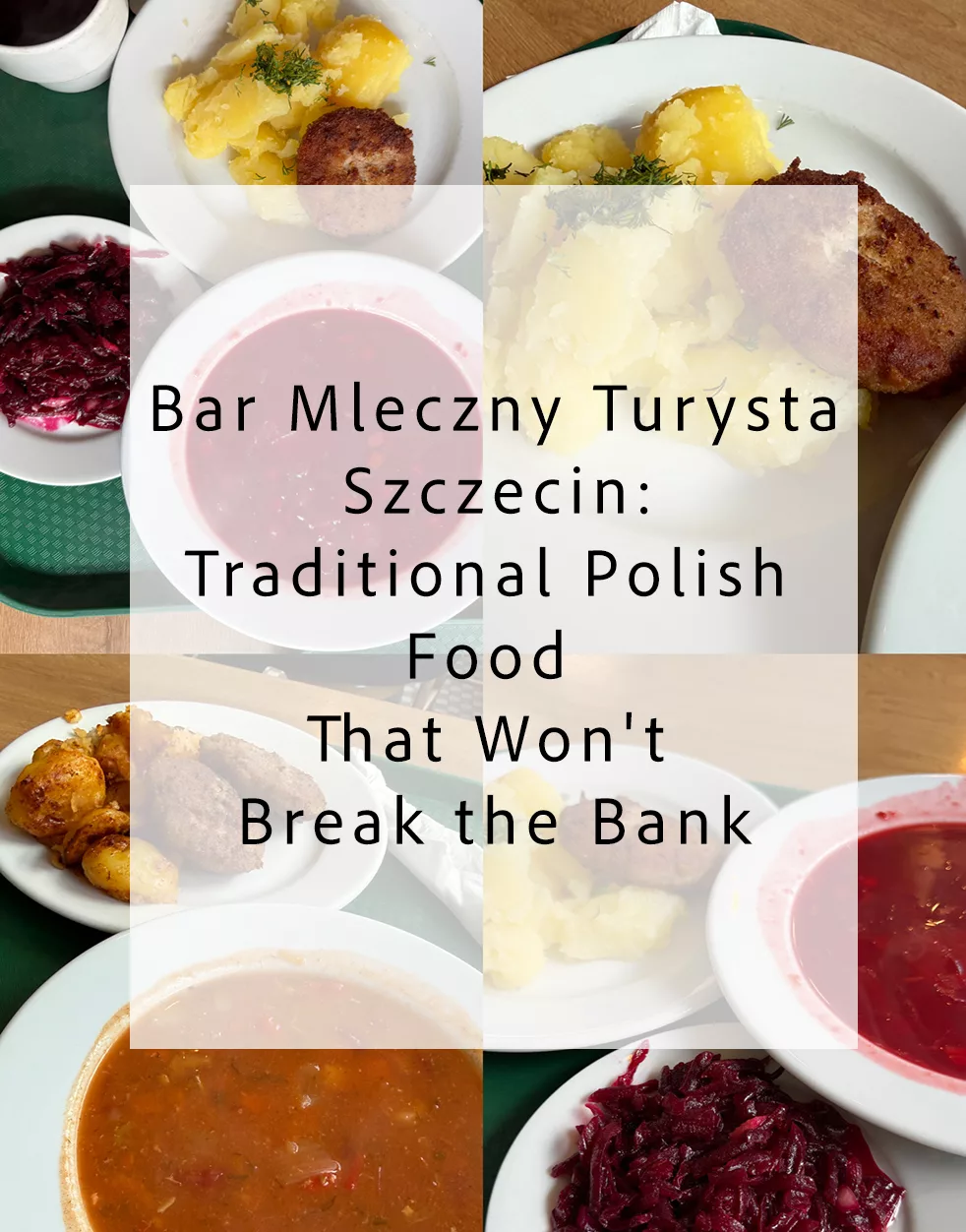
During my visit, I decided to order several classic Polish dishes to get a real feel for what Bar Mleczny Turysta has to offer.
I ordered: beetroot soup(barszcz), fish soup, minced cutlet (kotlet mielony), and compote(kompot)
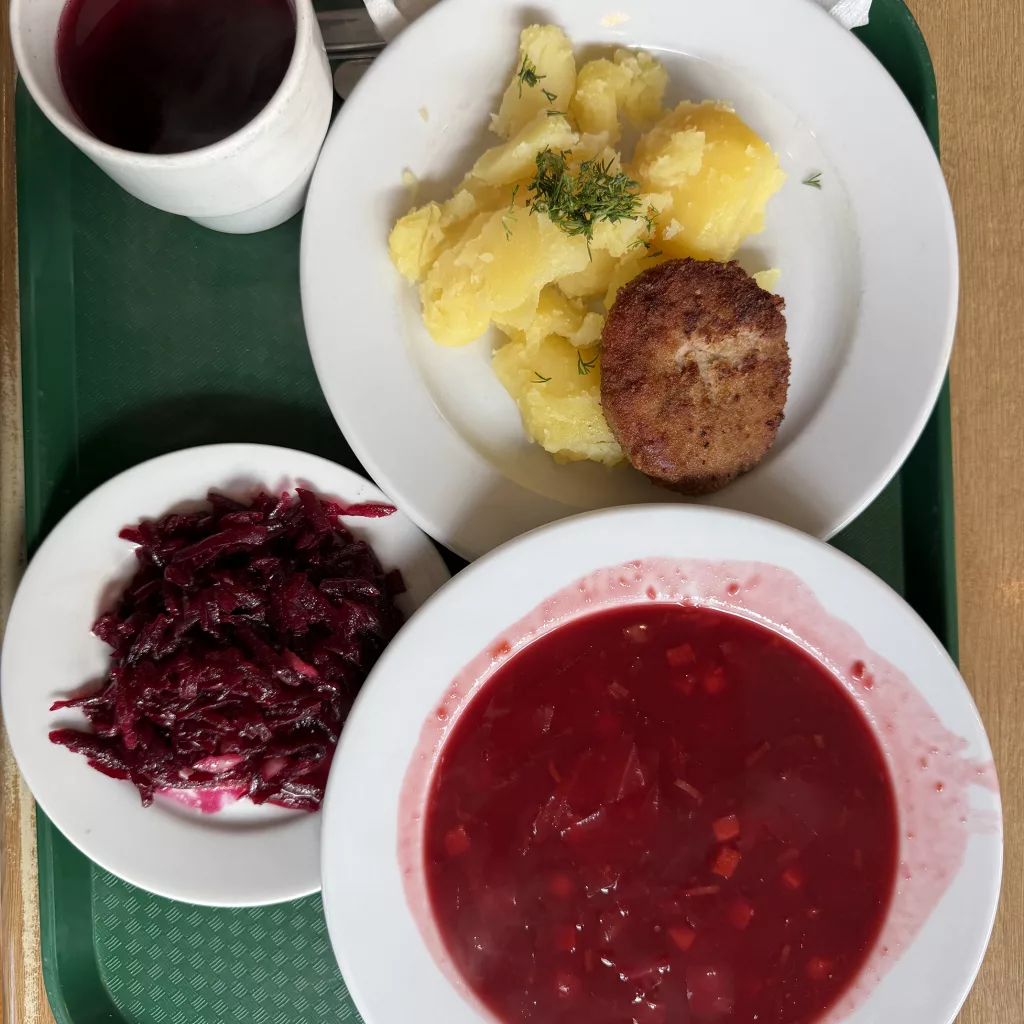
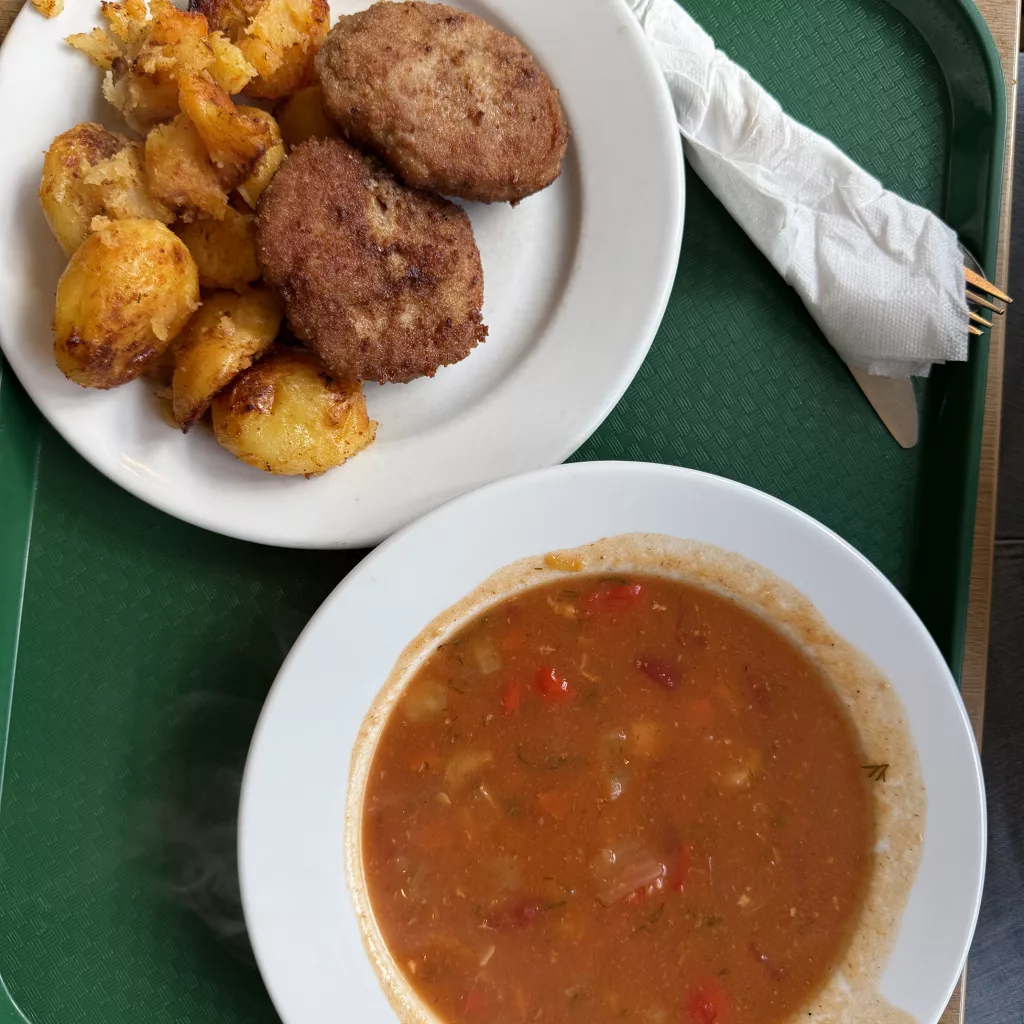
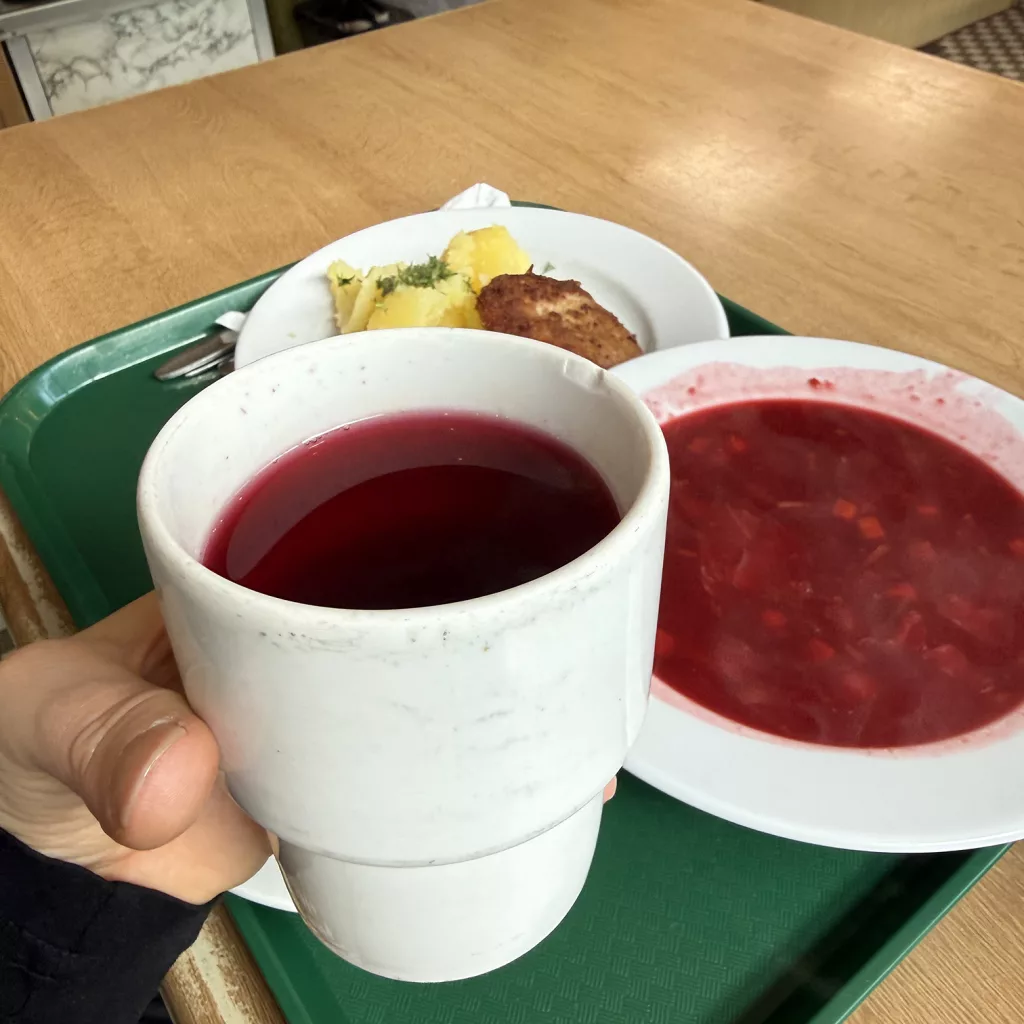
The total came to just approximately £12, which is 60zl, which genuinely surprised me considering both the portion sizes and the quality of the food.
One thing I particularly appreciated was that nothing felt mass-produced or rushed. The dishes tasted like proper homemade cooking rather than the reheated meals you might expect at such affordable prices.
If you’ve ever eaten at your Polish grandmother’s house, you’ll probably understand exactly what I mean.
How Much Does It Cost?
Perhaps the biggest surprise for many visitors is just how affordable the food is.
While restaurant prices across Europe continue to rise, Bar Mleczny Turysta remains one of the best-value places to eat in Szczecin.
As a rough guide, you can expect prices similar to the following:
| Dish | Approximate Price |
|---|---|
| Soup | 8–15 PLN |
| Pierogi | 15–25 PLN |
| Schabowy with potatoes | 25–35 PLN |
| Meatballs | 20–30 PLN |
| Potato pancakes | 18–28 PLN |
| Dessert | 8–15 PLN |
| Drink | 4–10 PLN |
For many visitors, it’s entirely possible to enjoy a filling two-course meal with a drink for around 35–50 PLN, making it exceptional value compared with many restaurants in the city centre.
Considering the generous portion sizes, you’ll certainly leave feeling satisfied.
Why Is It So Cheap?
Many first-time visitors assume that low prices must mean lower quality.
Fortunately, that’s not the case.
Milk bars keep prices affordable for several reasons:
- Simple interiors with low operating costs
- Fast table turnover
- Traditional recipes using seasonal ingredients
- Large-scale daily cooking
- Some milk bars in Poland continue to receive limited government support for selected dishes
Rather than focusing on luxury dining, they focus on feeding people well.
It’s a philosophy that has worked for generations.
My Experience at Bar Mleczny Turysta, What to Order and Why It’s Worth Visiting
My Experience at Bar Mleczny Turysta
One of the things I love most about travelling is discovering places that locals genuinely use. While it’s easy to find restaurants with thousands of reviews and perfectly styled interiors, they don’t always offer the most authentic experience. Sometimes, the places with the simplest décor and the shortest menus end up leaving the biggest impression.
That’s exactly how I felt when I visited Bar Mleczny Turysta.
From the moment I arrived, it was obvious this wasn’t a restaurant designed for tourists. There were no souvenir menus, no polished marketing displays and no staff trying to persuade people to come inside. Instead, there was a steady stream of local people collecting trays, chatting over lunch and enjoying meals that looked just like the kind of food many Polish families cook at home.
It immediately felt genuine.
The queue moved surprisingly quickly, even during the lunchtime rush, and before long I was standing in front of the serving counter trying to decide what to order. One of the things I enjoy about milk bars is that you don’t have to overthink your meal. The menu focuses on traditional favourites rather than endless choices, and almost everything is prepared fresh that day.
For my lunch, I chose a beetroot soup for starter, potato, beetroot salad and cutlet mielony for main dish together with compote to drink.
When my tray arrived, the first thing that stood out was the portion size. Like many traditional Polish meals, there was no attempt at minimalist presentation or tiny servings. Instead, the plate was generously filled with freshly prepared food that looked comforting and satisfying.
After the first bite, it became clear why this place has remained popular for so many years.
The flavours weren’t complicated, but they didn’t need to be. Everything tasted homemade, from the perfectly cooked potatoes to the well-seasoned meat and freshly prepared salad. Rather than trying to impress with unusual ingredients or modern techniques, the food relied on simple recipes that have stood the test of time.
It reminded me that some of the best meals aren’t necessarily the most expensive—they’re the ones made with care using recipes that generations have enjoyed before us.
One thing that also impressed me was how quickly tables turned over without ever feeling rushed. People arrived, enjoyed their lunch, chatted for a while and then made space for the next customers. The atmosphere remained lively but relaxed throughout my visit.
As I looked around the dining room, I realised that almost every table reflected a different part of Polish society. Students sat next to pensioners, office workers shared tables with families, and tourists quietly observed a dining tradition that has been part of everyday life for decades.
That sense of authenticity is something money simply can’t buy.
What Should You Order?
One of the most common questions people ask before visiting a milk bar is what they should try first.
The good news is that it’s difficult to make a bad choice.
If you’re visiting Bar Mleczny Turysta for the first time, I’d recommend building your meal around some of Poland’s most iconic dishes.
Schabowy
Often described as the Polish version of a schnitzel, schabowy is one of the country’s best-loved comfort foods.
A thin pork cutlet is coated in breadcrumbs before being fried until beautifully golden and crispy. It’s usually served with mashed or boiled potatoes and a selection of fresh salads.
Simple, filling and incredibly satisfying.
Pierogi
Perhaps Poland’s most famous dish, pierogi are soft dumplings filled with a variety of savoury or sweet ingredients.
Traditional fillings include:
- potato and cheese (pierogi ruskie)
- minced meat
- mushrooms and cabbage
- seasonal fruit
- sweet cheese
Served with fried onions, butter or sour cream, they’re a must-try for anyone visiting Poland for the first time.
Gołąbki
These stuffed cabbage rolls are another classic of Polish home cooking.
Filled with minced meat and rice before being baked in a rich tomato sauce, they’re hearty, comforting and perfect during the colder months.
Potato Pancakes (Placki Ziemniaczane)
Golden, crispy and freshly fried, potato pancakes can be served either sweet or savoury.
Some people enjoy them with sour cream, while others prefer mushroom sauce or goulash.
Whichever version you choose, they’re one of Poland’s most comforting dishes.
Polish Soups
Don’t underestimate the soups.
Unlike many countries where soup is simply a starter, Polish soups are often substantial enough to be a meal in themselves.
Some favourites include:
- Żurek
- Rosół
- Tomato soup
- Beetroot soup
- Cucumber soup
Many locals order soup alongside their main course, creating a filling two-course lunch at a surprisingly affordable price.
The Portion Sizes
If there’s one thing you’ll quickly notice, it’s that nobody leaves Bar Mleczny Turysta feeling hungry.
Portions are generous, especially considering the prices.
Compared with many modern restaurants where presentation sometimes takes priority over quantity, milk bars remain refreshingly traditional. The emphasis is on providing filling meals that satisfy rather than simply looking attractive on social media.
If you’re travelling on a budget, this makes Bar Mleczny Turysta exceptional value.
A single main course is often enough for many people, although adding a bowl of soup or dessert is tempting given how reasonably everything is priced.
Service
The service at Bar Mleczny Turysta reflects the restaurant’s practical approach.
Don’t expect formal table service or lengthy explanations of the menu.
Instead, staff work efficiently behind the counter, serving hundreds of meals every day while keeping the queue moving smoothly.
Although English may not always be widely spoken, don’t let that put you off.
Many dishes are easy to recognise, and translation apps make ordering straightforward if you’re unsure.
In fact, I found that the language barrier added to the authenticity of the experience. Rather than feeling like a tourist attraction, it felt like I’d stepped into everyday Polish life.
Who Should Visit Bar Mleczny Turysta?
One of the things I appreciated most is that this is the kind of place that appeals to almost everyone.
Budget travellers
If you’re trying to keep your travel costs down, you’ll struggle to find better value anywhere in Szczecin.
Food lovers
Anyone interested in traditional Polish cuisine will discover recipes that have been enjoyed for generations.
Families
The relaxed atmosphere, generous portions and affordable prices make it an excellent choice for families travelling with children.
Solo travellers
Milk bars can sometimes feel more welcoming than restaurants when travelling alone.
The casual atmosphere means nobody feels out of place, whether you’re eating by yourself or with friends.
Anyone looking for authentic experiences
If your goal is to experience everyday life rather than tourist attractions designed specifically for visitors, Bar Mleczny Turysta offers something genuinely special.
Tips Before You Visit
To make the most of your visit, here are a few helpful tips:
Arrive before the lunch rush
Between 12:00 pm and 2:00 pm, queues can become quite long.
Visiting a little earlier usually means more available seating and a wider choice of dishes.
Check the daily menu
Many milk bars prepare different dishes each day.
If you’re hoping to try something specific, it’s worth checking the menu online or asking what’s available.
Don’t judge the restaurant by its appearance
One of the biggest mistakes visitors make is expecting stylish interiors.
Milk bars have always prioritised food over decoration.
That’s part of their charm.
Bring an appetite
Portions are generous, and you’ll probably find yourself eating more than expected.
Be prepared for a local experience
This isn’t a restaurant created for tourists.
It’s a place where locals come for lunch, and that’s exactly what makes it so memorable.
Milk Bar vs Modern Restaurant
During my time in Poland, I’ve eaten in everything from elegant city-centre restaurants to tiny neighbourhood cafés.
Both have their place, but they offer very different experiences.
| Milk Bar | Modern Restaurant |
|---|---|
| Traditional home cooking | Contemporary cuisine |
| Very affordable | Usually more expensive |
| Simple surroundings | Stylish interiors |
| Fast service | Relaxed dining |
| Popular with locals | Mix of locals and tourists |
| Authentic everyday experience | More special-occasion dining |
Personally, I don’t think one is better than the other.
Instead, they complement each other.
You might choose a modern restaurant for an evening meal, but if you want to understand how many Polish people have eaten for generations, a visit to a milk bar is almost essential.
It’s one of those experiences that helps you connect with the local culture in a way that sightseeing alone never can.
Is Bar Mleczny Turysta Worth Visiting?
If you’re looking for an honest opinion, my answer is absolutely yes.
Bar Mleczny Turysta isn’t the kind of restaurant you’ll visit because it has a Michelin star or an interior designed for Instagram. You visit because it offers something far more valuable: a genuine glimpse into everyday life in Poland.
In an age where many city centres are filled with international restaurant chains and tourist-oriented dining experiences, places like Turysta have managed to preserve a tradition that has been part of Polish culture for generations. It’s somewhere locals continue to eat not because it’s fashionable, but because the food is consistently good, the portions are generous and the prices remain affordable.
For visitors, that’s a rare opportunity.
Instead of experiencing a version of Polish cuisine adapted for tourists, you’ll enjoy the same comforting dishes that have been served to families, students and workers for decades.
If you’re travelling on a budget, Bar Mleczny Turysta is one of the best-value restaurants in Szczecin. Even if you’re not watching your spending, it’s still worth visiting simply because it offers an authentic dining experience that many modern restaurants can’t replicate.
Sometimes the best meals aren’t the most expensive—they’re the ones that tell a story.
How to Include Bar Mleczny Turysta in Your Szczecin Itinerary
Because of its central location, Bar Mleczny Turysta fits easily into a day of exploring Szczecin.
Here’s one way to structure your day:
Morning
Start by exploring Plac Grunwaldzki, one of Szczecin’s main squares, before wandering through the nearby shopping streets.
Continue towards Galaxy Shopping Centre if you’d like to browse the shops or enjoy a coffee.
Lunchtime
Head to Bar Mleczny Turysta for an authentic Polish lunch.
Arriving just before midday will usually help you avoid the busiest queues while ensuring the widest selection of freshly prepared dishes.
Afternoon
After lunch, continue towards:
- Wały Chrobrego
- The Pomeranian Dukes’ Castle
- Szczecin Old Town
- The Philharmonic Hall
- The riverside promenade along the Oder
This route allows you to combine sightseeing with one of the city’s most authentic dining experiences.
Why Tourists Should Visit a Milk Bar at Least Once
Every country has restaurants that locals recommend.
In Italy, it might be a family-run trattoria.
In Portugal, a neighbourhood tasca.
In Spain, a busy tapas bar.
In Poland, it’s often a bar mleczny.
Milk bars aren’t simply places to eat—they’re part of the country’s social history. They represent a dining tradition that has survived political change, economic challenges and changing food trends while remaining true to its original purpose: serving affordable, homemade meals to everyone.
Visiting one helps you experience a side of Poland that many tourists miss.
You’ll hear Polish conversations at neighbouring tables, see office workers popping in for lunch, watch pensioners enjoying familiar favourites and discover dishes that rarely appear on international restaurant menus.
For me, that’s what travel is all about.
Not just seeing famous landmarks, but understanding everyday life.
Frequently Asked Questions
What is a milk bar in Poland?
A milk bar (bar mleczny) is a traditional self-service restaurant serving affordable homemade Polish food. Originally focused on dairy-based meals, today’s milk bars offer a wide range of classic dishes including soups, pierogi, schnitzels, pancakes and cabbage rolls.
Why are they called milk bars?
The first milk bars mainly served inexpensive meals made with milk, eggs, flour and vegetables. Although menus have expanded considerably over the years, the original name has remained.
Is Bar Mleczny Turysta suitable for tourists?
Absolutely.
Although most customers are local residents, tourists are very welcome. Visiting a milk bar is one of the most authentic food experiences you can have in Poland.
Is Bar Mleczny Turysta expensive?
Not at all.
It’s considered one of the most affordable places to eat in Szczecin. Depending on what you order, you can usually enjoy a generous meal for around 35–50 PLN, making it excellent value for money.
Are there vegetarian options?
Yes.
Most milk bars serve several vegetarian dishes, including cheese pierogi, potato pancakes, vegetable soups and seasonal salads.
Do I need to speak Polish?
No, although knowing a few basic Polish phrases is always appreciated.
Many visitors successfully order using translation apps or by pointing to the menu. The staff are used to serving international visitors, particularly during the summer months.
Can I pay by card?
Payment methods occasionally change, so it’s always worth carrying a small amount of cash just in case. However, many milk bars now accept debit and credit cards.
Is Bar Mleczny Turysta family-friendly?
Yes.
The relaxed atmosphere, quick service and affordable prices make it an excellent choice for families travelling with children.
Final Thoughts
There are plenty of excellent restaurants in Szczecin, but few capture the city’s character quite like Bar Mleczny Turysta.
It’s not trying to reinvent Polish cuisine or follow the latest food trends. Instead, it celebrates the dishes that generations of Poles have grown up with—simple, comforting meals prepared with care and served without unnecessary fuss.
Whether you’re visiting Szczecin for a weekend break, travelling across Poland by train or simply searching for an authentic place to eat, Bar Mleczny Turysta deserves a place on your itinerary.
For me, it wasn’t just about the food.
It was about experiencing a tradition that has shaped Polish dining culture for more than a century. Sitting among locals, enjoying a freshly cooked meal and seeing daily life unfold around me offered a reminder that some of the most memorable travel experiences are often the simplest.
If you’re looking for authentic Polish food, generous portions and some of the best value you’ll find in the city, I don’t think you’ll be disappointed.
So next time you’re in Szczecin, skip the international chains for one meal and give a Polish milk bar a try.
You might just discover one of your favourite travel memories.
Quick Visitor Information
| Bar Mleczny Turysta Szczecin | |
|---|---|
| 📍 Address | ul. Edmunda Bałuki 17, Szczecin |
| 🍽 Cuisine | Traditional Polish home cooking |
| 💰 Price | £ / Budget |
| 👨👩👧👦 Good for | Families, solo travellers, couples, budget travellers |
| 🥟 Must Try | Schabowy, pierogi, tomato soup, potato pancakes |
| ⭐ My Rating | ★★★★★ |
| ⏱ Allow | 45–60 minutes |
| 💳 Card Payments | Usually yes (carry cash just in case) |